Showing posts with label Where to go in Peru. Show all posts

Monday, August 20, 2012

Journey of a Lifetime ( Part 9 ) - Traveling to Puno


We packed our suitcases and boarded the bus to our next destination... Lake Titicaca which was located in Puno, Peru. It was a 7 hour journey from Cusco to Puno.


We had stops on our way to Puno. The first one was Raqchi or Racchi. 


Racchi is 11,815 feet above sea level. Located at the base of the Quimsachata volcano. It is known for the remains of the temple of Wiracocha. The temple was massive and was about 300 feet long. The foundation for the wall was over 10 feet high. They are the remains of the foundations of 11 pillars on each side of the wall, and there are ruins of living quarters around the site.

According to Jesus, the most important building inside the complex was the "Wiracocha temple". It was built by the Inca Wiracocha in honour to the Superior God invisible for the Andean people: "Apu Kon Titi Wiracocha". 


Near the temple were rows of Inca homes and storehouses. This was where the rich people were housed. The entire complex was surrounded by a wall.  Outside the wall was where the poor and the workers lived. Little of this wall still survives today, it’s bricks were used by the people of the area to build their houses.


Our next stop was at La Raya.  It was the border dividing the regions of Cusco and Puno. At 14,500 feet above sea level, La Raya provided beautiful views of the Andes rising high above alpaca farms.


Finally, we reached our destination.... Puno. Puno is the capital and largest city of the Puno Region and Province in Southeastern Peru. It is also the capital of Peruvian folklore and headquarters of the Virgin of Candelaria festivity and rests on the shores of Titicaca Lake, the highest navigable lake in the world. Puno is located at the edge of Lake Titicaca, 12,421 feet above sea level.


Puno's extreme elevation of 12,566 ft. was even higher than Cusco, so unless you've already spent time in the Andes, you'll almost certainly need to rest for at least a day to acclimatize. The city of Puno,  is a popular tourism and traveler's destination for a few reasons, the most obvious being the fact that it's located on the shore of the world famous and fascinating Lake Titicaca. The other reason is it offers relatively easy border crossing choices to Bolivia - which is just on the other side of the lake.


We proceeded to Royal Inn, our hotel and spent the rest of the day resting due to altitude sickness. I wasn’t feeling well when I arrived in Puno. In fact most of us in the group were feeling woozy because of the high altitude of La Raya, but I was in Puno for one reason, and not even illness could stop me from seeing what I traveled all the way there to see---- the fabled Uros floating islands. Before retiring to our rooms that evening, Jesus informed that that if we were having problems with our breathing there was oxygen available at the lobby.  I lined up together with the rest of the group to have a whiff of oxygen.

He gave us tips on how to overcome altitude sickness... let me share them with you..

Tips for High Altitude sickness:

* Try to lie down at least an hour when you arrive.
* Walk and move slow and steady.
* Drink a lot of fluids like water, soups and coca tea. The reason for this, Jesus explains, is that our digestion is slower in high altitude.
* The first lunch or dinner when you arrive need to be light meals. Try to eat easily digested foods like rice, pasta, vegetables, chicken and fish.. No beef.
* Try to avoid drinking alcohol on the first day at least. Our body works twice as hard at higher altitude on digestion and consumption.
* Do not try to breath faster or slower. Let your breathing adjust naturally.
* If you feel dizzy, make sure you stop and sit down. Do not force yourself to move on.

To avoid stomach problems:

* always eat well cooked food.
* Do not eat raw vegetables ( salads ) or non-peeled fruits.
* Drink plenty water with meals.
* If you have diarrhea, stop drinking coca tea. Drink black tea instead.

It was a long ride to Puno and having altitude sickness will really make you feel worse.... I better get some rest tonight -- tomorrow we are going to Lake Titicaca and the Uros Floating Villages...


Tuesday, July 24, 2012

A Journey of a Lifetime ( Part 5 ) The Maras Salt Mines


From Moray -- the group headed towards the famous salt mines of Maras. It is also known as Salinas de Maras. Maras has an elevation of 11,500 feet above sea level. This picturesque town is home to the most important salt mines in the region. The salt mines date back to Inca times and at one point was the largest salt producer in the Sacred Valley.


Our driver stopped at the top so we could get a nice overview of the salt mines. It was amazing! What looked like a patchwork quilt of white and various shades of brown cascading down a hillside were in fact thousands of terraced salt mines that have existed since pre-Inca times yet are still operable till today. Fascinated by its beauty and astonished by the fact salt can actually come from ancient mines and not only from sea water, I was left speechless by the site of salt encrusted ponds before me.

According to Jesus, our guide, there are approximately 5740 pools dug into the mountainside that each yield about 150 kg of salt per month. Each salt pool is worked by a family. He explained to us how the process was done.  The salt is actually not mined but rather it all comes from a tiny stream above the hill that has been redirected to ponds.  The ponds are stacked over and over on the hill side, with the top pond spilling into the lower one until it reaches the cliff side. Once a pond is full -- the stream is directed to new ponds as the ones that are full are left to evaporate, leaving the salt behind. 

Being very curious, I asked him why did the Incas build these salt mines high up in the mountains --- this is what he answered, " the Incans believed that by building these mines up in the mountains they will be closer to their Gods "..


Lulu and I decided not to go down and get a closer view of the salt mines. After taking souvenir shots of the salt mines, we were going to our next stop --- to have lunch with a Peruvian family. This was going to be our first Peruvian meal. 

Friday, July 6, 2012

A Journey of a Lifetime ( Part 2 ) - The Larco Herrera Museum


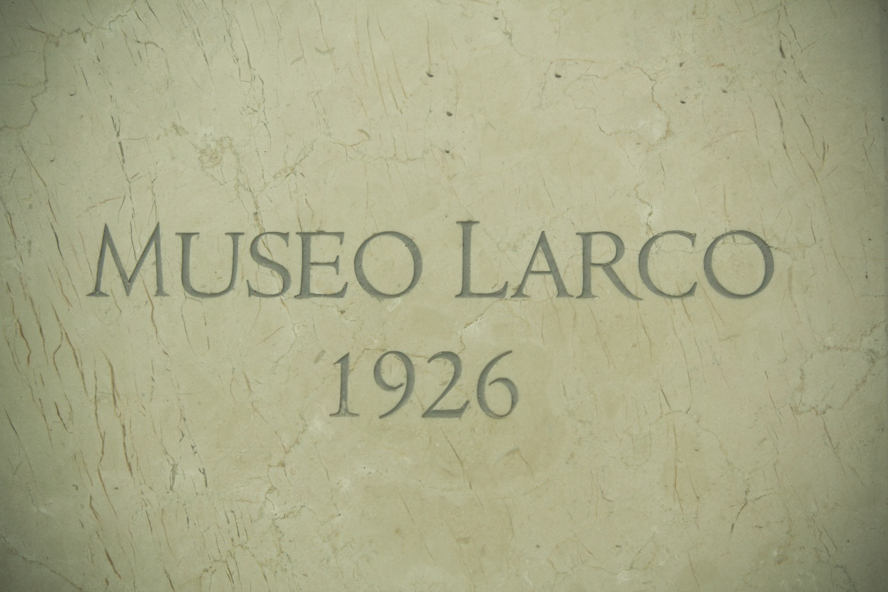
The Larco Herrera Archaeological Museum is located in Pueblo Libre, near the upscale neighborhood of Miraflores. It was founded in 1926. As you enter the Larco Herrera Archaeological Museum you will be greeted by at least 20 beautiful bougainvillea varieties. 


The Larco Herrera Museum represents an architectural heritage of national significance. The museum is known to have the biggest private collection of pre-Columbian art that exists in the world. You will find over 45,000 archaeological pieces on gold, ceramics and textiles that have been classified by renowned specialists and scholars. The Larco Herrera Museum is one of the most visited Peruvian tourist attractions. Here you can also find an incomparable collection of “Erotic Huacos” or Erotic Art ( pre-Hispanic ceramic relics representing animals, persons and objects). This museum is more famous for its Moche art.


The main idea of Rafael Larco Hoyle, an archeologist and the founder of the Larco Museum in 1926, was to share his passion for pre-Columbian art and its development until the Spanish arrival. This passion made him investigate and discover important masterpieces that are considered today as  worldwide icons of Pre-Columbian art. 

Each area of the museum is fascinating and offers a complete collection of the pre-Columbian everyday life objects including crowns, earrings, nose ornaments, garments, masks and vases, finely wrought in gold and decorated with semi-precious stones. In the erotic gallery you will be intrigued by all the Moche jars and by the ceramic pots showing, in a certainly realistic and humoristic way, their sexual habits.

We were able to see the highlights of this museum. I will enumerate the rooms as we go along the way.


With 45,000 artifacts found in this museum.... it will take you a whole month to view each and every artifact. I have decided to divide the artifacts into several groups and took photos of which artifact I liked best. 

Thursday, July 5, 2012

A Journey of a Lifetime ( Part 1 ) The CIty tour of Lima


All of us have a bucket list of places around the world where we would like to visit... My friend, Lulu and I have decided to make one incredible journey to Peru. It has been our longtime dream to visit Machu Picchu, known as the Land of the Incas.

After carefully planning our trip to Peru for almost a year... our dream was about to be fulfilled. Lulu found the perfect tour schedule. Come and follow us while we discover the beauty of Peru. Let us share with you what we have learned about Peru. Its history, culture and the beauty of what Peru has to offer. Through my blog and photos we will share with you what we experienced on this trip.... here is our story..


We flew from Los Angeles to Peru aboard COPA airlines, with a lay over in Panama.  When we arrived in Lima, Peru we were met by our tour guide, Jesus and we were escorted to Hotel Antigua Miraflores located in an upscale district in Lima. It looked like a house that was converted into a small " boutique hotel ".


Set in a Spanish-style mansion and oozing colonial period charm, this hotel offered a much more intimate and authentic experience than staying in a chain hotel. The decor is old fashioned, and the staff was very helpful and courteous. The hotel is beautiful...it made us feel like we were staying in a home!!


After breakfast we had a brief orientation with our tour guide and off we went on a tour of the city of Lima.